Gold and Silver Price Plunge: Why Experts Believe the Drop Is Temporary
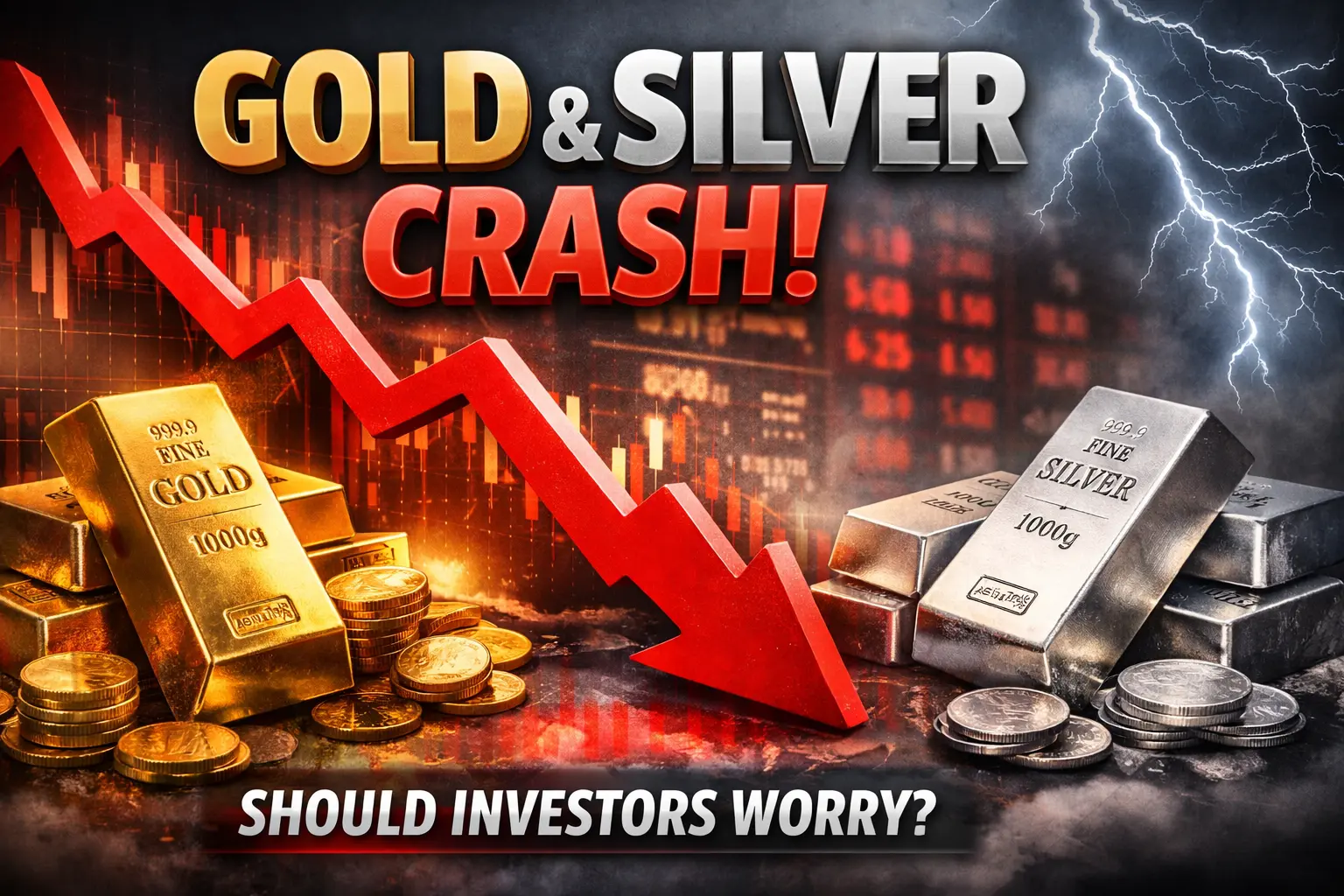
Gold and silver shocked global markets last week with a sudden and dramatic sell-off. Silver prices plunged by nearly 30% in a matter of days, while gold fell close to 10%, wiping out a portion of gains that had taken both metals to historic highs only a week earlier. For investors who had grown accustomed to an almost nonstop rally, the correction felt abrupt and unsettling.
Yet despite the scale of the fall, market analysts are largely urging calm. Many believe the drop is not the end of the bull run, but rather a sharp pause in what remains a strong long-term trend for precious metals. To understand why, it is important to look at what caused the crash—and why experts think gold and silver could recover.
A Stunning Reversal After Record Highs
Only days before the sell-off, gold had surged past $5,600 per ounce for the first time in history, while silver briefly topped $120, an unprecedented level. These milestones capped an extraordinary rally that had been building since 2024 and accelerated through 2025.
The sudden reversal on Friday erased weeks of gains almost instantly. On Monday, prices remained volatile: silver traded around $76.92, down roughly 2%, while gold hovered near $4,651, also down about 2%. Although both metals bounced off their lows, they remained far below last week’s record highs.
Such violent price swings inevitably raise a key question for investors: was this the beginning of a deeper collapse, or simply a correction after an overheated rally?
Why Analysts Are Not Panicking
Despite alarming headlines, most major financial institutions remain constructive on gold, and cautiously optimistic on silver.
Analysts at Sucden Financial described the sell-off as potentially short-lived, noting that precious metals still retain strong long-term appeal as safe-haven assets. They expect a “modest near-term recovery” once market volatility eases.
At JPMorgan, analysts went even further, raising their year-end gold price forecast to a record $6,300. Their view is that gold’s rally was never expected to move in a straight line. Instead, they argue the market is simply “digesting and resetting” before resuming its longer-term uptrend, supported by sustained demand from central banks and institutional investors.
Similarly, Michael Hsueh, a metals analyst at Deutsche Bank, retained the bank’s $6,000 year-end gold target. He emphasized that current conditions do not suggest a lasting reversal, attributing the decline more to short-term volatility than to any collapse in confidence in gold as a store of value.
From a domestic market perspective, Apurva Sheth of Samco Securities described the correction as healthy. According to him, the pullback allows excessive optimism to cool, reducing speculative froth and creating a stronger foundation for future gains.
What Triggered the Sharp Sell-Off?
The immediate catalyst for the plunge was political and monetary in nature. Gold and silver prices began falling shortly after former President Donald Trump announced Kevin Warsh as his pick for the next chair of the U.S. Federal Reserve.
Warsh is widely viewed as more hawkish on monetary policy than other potential candidates. Historically, he has been less inclined toward aggressive interest-rate cuts. Since lower interest rates typically benefit non-yielding assets like gold and silver, markets interpreted his nomination as a negative signal for precious metals.
Christopher Forbes of CMC Markets told CNBC that gold is likely to remain volatile as investors wait for clarity on Warsh’s policy direction. Adding to the pressure, the U.S. dollar strengthened following the announcement, reversing earlier weakness that had helped fuel the metals rally.
However, several analysts argue that Warsh’s nomination alone cannot explain the scale of the crash. John Stepek, a metals writer for Bloomberg, suggested the sell-off was inevitable after prices “went up too far, too fast.” In his view, the market simply hit a natural limit after an unsustainable surge.
The Bigger Picture: Why Gold and Silver Rose So Fast
To understand the correction, one must first understand the rally that preceded it. In 2025 alone, gold gained as much as 65%, while silver soared an extraordinary 150%. The momentum carried into early January, pushing prices to record levels.
This surge was driven by a rare combination of factors:
- Interest rate cuts in 2025, which reduced the opportunity cost of holding precious metals.
- Geopolitical tensions, including heightened conflicts involving Iran, Europe, and Latin America.
- Trade and tariff uncertainty following policy shifts early in Trump’s second term.
- A weakening U.S. dollar, which typically boosts dollar-denominated commodities like gold and silver.
- Rising industrial demand for silver, especially from the technology and renewable energy sectors.
In addition, concerns about the independence of the Federal Reserve added fuel to the rally. Trump’s repeated attacks on then-chair Jerome Powell, along with a Justice Department investigation into Powell’s testimony before Congress, unsettled markets and increased demand for safe-haven assets.
Was the Market Overheated?
Even before the crash, some experts were warning that prices had become disconnected from fundamentals. Nicky Shiels, head of metals strategy at MKS PAMP, described the market as “broken,” citing unheard-of volatility and tactically overbought conditions. Other analysts echoed similar concerns, noting that demand growth did not fully justify the speed or magnitude of the price increases.
From this perspective, the sell-off looks less like a crisis and more like a classic market correction—painful, but not unusual after such a steep rally.
What Happens Next for Investors?
In the near term, volatility is likely to persist. Prices may continue to swing sharply as markets react to monetary policy signals, currency movements, and geopolitical developments.
However, the broader consensus among analysts remains clear: the long-term case for gold—and to a slightly lesser extent, silver—remains intact. Central bank buying, persistent geopolitical uncertainty, and structural concerns about fiat currencies continue to underpin demand.
For long-term investors, the recent plunge may ultimately be remembered not as the end of the precious metals boom, but as a necessary reset in a market that had simply run too hot, too fast.
Gold and silver’s sudden crash was dramatic, but not entirely unexpected. After months of explosive gains, the market needed a correction. While short-term uncertainty remains high, most experts agree that the fundamental drivers supporting precious metals are still in place. For now, analysts’ message is simple: don’t panic—the story of gold and silver may be far from over.