How Much Will 24-Carat Gold Cost You Today in India? Check Latest Rates in Your City
Gold continues to hold its reputation as one of the most reliable investment assets in India. Traditionally valued for both cultural significance and financial security, the yellow metal is widely regarded as a hedge against inflation and currency volatility. On February 16, gold prices witnessed a noticeable decline across domestic markets, reflecting global cues and shifts in investor sentiment.
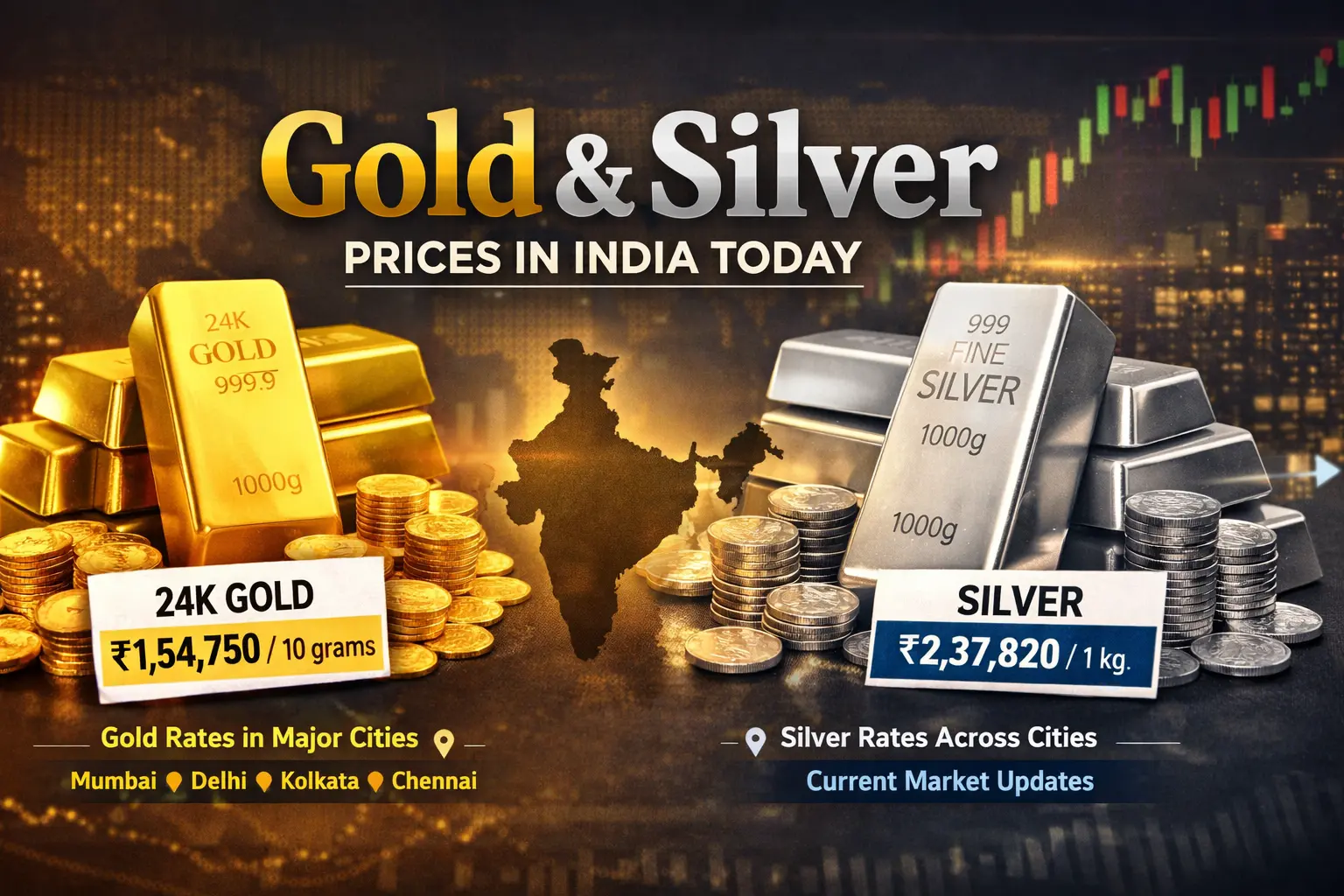
As of 10:20 am, according to India Bullions, the price of 24-carat gold stood at ₹1,54,750 per 10 grams, marking a decline of ₹1,770 or 1.13 percent. Silver prices also softened significantly, trading at ₹2,37,820 per kilogram, down ₹8,240 or 3.35 percent.
Let’s take a closer look at today’s gold and silver rates, city-wise variations, and the broader global factors influencing precious metal prices.
Gold Price in India Today (February 16)
As per the latest available data:
- 24K Gold: ₹1,54,750 per 10 grams
- 22K Gold: ₹1,41,854 per 10 grams
- 18K Gold: ₹1,16,063 per 10 grams
The decline in gold prices today follows broader market adjustments influenced by international economic signals and fluctuations in currency markets.
Gold Rates in Major Indian Cities (Per 10 Grams)
Gold prices vary slightly across cities due to differences in local demand, transportation costs, and state-level taxes. Here are the latest rates:
- Mumbai: ₹1,54,570
- Kolkata: ₹1,54,230
- Delhi: ₹1,54,310
- Chennai: ₹1,54,890
- Hyderabad: ₹1,54,680
- Bengaluru: ₹1,54,560
Among these cities, Chennai is currently witnessing the highest gold price, while Kolkata has the lowest among the listed metropolitan centers.
Silver Prices in Major Cities (Per Kilogram)
Silver has also seen a significant correction. The city-wise prices are as follows:
- Mumbai: ₹2,37,750
- Kolkata: ₹2,36,790
- Delhi: ₹2,37,340
- Chennai: ₹2,37,790
- Hyderabad: ₹2,37,480
- Bengaluru: ₹2,37,290
The broader drop in silver prices indicates higher volatility compared to gold, which is typical due to silver’s dual role as both a precious and industrial metal.
MCX Gold and Silver Futures Performance
Domestic futures trading also reflected the softer trend. On the Multi Commodity Exchange of India (MCX):
- Gold futures (April contract) touched a high of ₹1,55,100 before trading at ₹1,54,534, down 0.87 percent as of 10:23 am.
- Silver futures (March contract) reached a day’s high of ₹2,38,489 before settling around ₹2,37,155, reflecting a decline of 2.95 percent.
Futures contracts often respond more dynamically to global economic signals, currency movements, and investor sentiment compared to physical gold markets.
Why Gold Prices Are Falling Today
Several interconnected factors have contributed to today’s price correction:
1. Global Market Movements
Indian gold prices are closely aligned with international benchmarks. Any movement in global bullion markets directly impacts domestic pricing, especially since India imports a significant portion of its gold.
2. US Economic Data
Recent weaker-than-expected retail sales data from the United States has influenced market sentiment. While such data can often support gold prices due to safe-haven demand, short-term profit booking and currency fluctuations sometimes result in temporary corrections.
3. Dollar Movement
Gold is priced globally in US dollars. When the dollar weakens, gold often becomes attractive for global investors. However, currency volatility can also lead to short-term fluctuations in local pricing.
4. Investor Positioning
Market participants often adjust their holdings based on interest rate expectations, inflation outlook, and geopolitical risks. Short-term corrections are common after strong rallies.
Is Gold Still a Good Investment?
Despite short-term declines, gold continues to be viewed as a strategic asset. Over decades, it has demonstrated resilience during:
- Inflationary periods
- Currency devaluation
- Economic downturns
- Geopolitical uncertainty
Investors increasingly consider gold as a portfolio diversifier. Financial advisors typically recommend allocating 5–15 percent of a diversified portfolio to gold, depending on risk tolerance and investment goals.
Gold as an Inflation Hedge
One of the primary reasons gold remains popular is its historical role as a hedge against inflation. When the purchasing power of currency declines, tangible assets like gold often retain value better than cash.
In recent years, global inflationary pressures and uncertainty in equity markets have reinforced gold’s appeal. Even though prices fluctuate daily, long-term investors view dips as potential buying opportunities.
What Could Drive Gold Prices Next?
Market experts believe that precious metals may witness renewed upward momentum if:
- Investor confidence in dollar-based assets weakens further
- Global economic growth slows
- Central banks adopt accommodative monetary policies
- Geopolitical tensions increase
Additionally, domestic demand during wedding and festive seasons in India often supports physical gold prices.
Should You Buy Gold Now?
The decision to buy gold depends on your investment horizon and objective:
- Short-term traders should monitor global cues and MCX trends closely.
- Long-term investors may consider systematic buying during price corrections.
- Jewellery buyers may benefit from the current dip if purchasing for upcoming occasions.
It is important to note that gold prices can remain volatile in the short run. Consulting a financial advisor before making large allocations is advisable.
Today’s correction in gold and silver prices reflects normal market fluctuations influenced by global economic indicators and currency movements. With 24-carat gold priced at ₹1,54,750 per 10 grams and silver at ₹2,37,820 per kilogram, investors are closely watching international developments for directional cues.
While short-term price movements can be unpredictable, gold continues to maintain its long-standing status as a store of value and financial safeguard. Whether for investment diversification or cultural significance, gold remains deeply embedded in India’s economic and social fabric.
Investors should stay updated with daily price movements, monitor global market trends, and align their strategy with long-term financial objectives.