
The recent surge in Tata Motors’ share price has captured the attention of investors across Dalal Street. Backed by optimistic management guidance for Q4 FY26, solid domestic demand, and continued deleveraging, the company appears to be regaining momentum. However, beneath the surface, challenges at Jaguar Land Rover (JLR) continue to weigh on the global business, creating a nuanced investment case.
This article examines the key growth drivers, operational headwinds, competitive positioning, valuation metrics, and analyst outlook surrounding Tata Motors.
Domestic Strength Fuels Stock Momentum
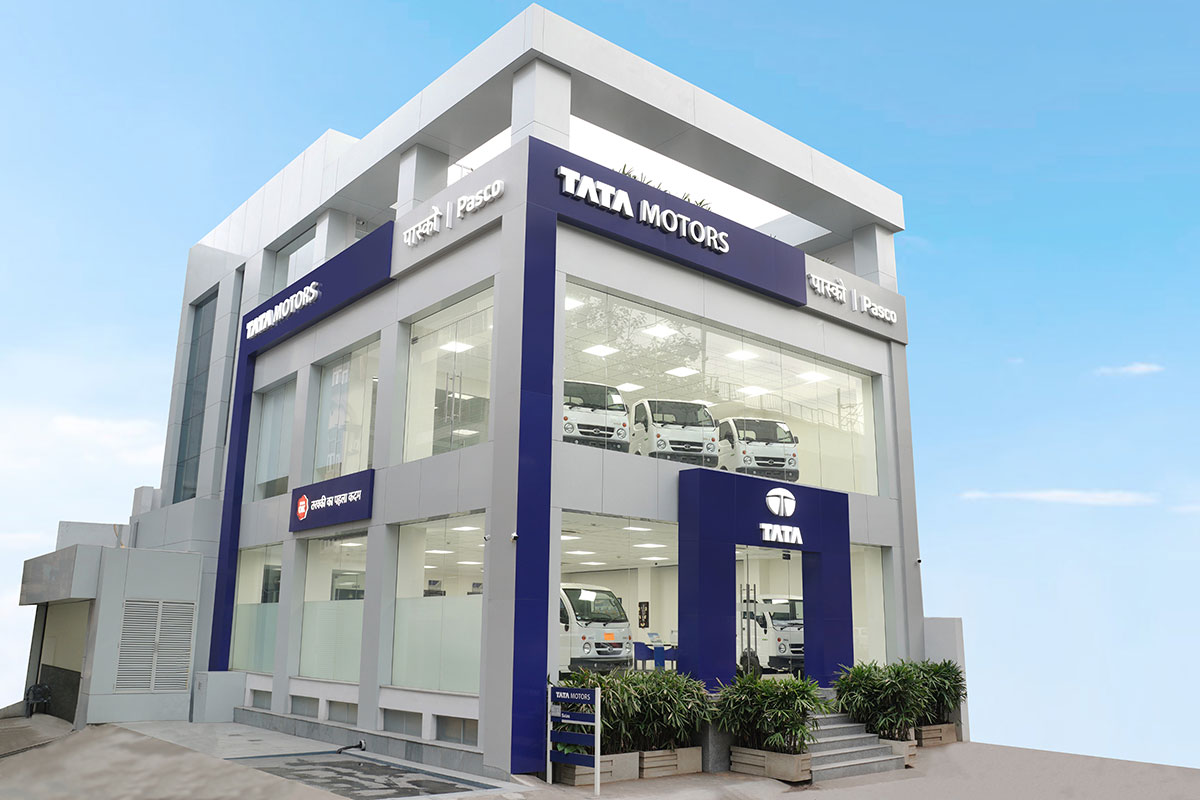
The recent rally in shares of Tata Motors has been largely supported by its strong domestic performance. Management’s guidance for the fourth quarter of FY26 indicates improving business conditions, particularly in the passenger vehicle (PV) and commercial vehicle (CV) segments.
Passenger Vehicles: Post-GST Momentum
Tata Motors’ PV division continues to benefit from strong retail demand and new product launches. After the implementation of GST 2.0, market dynamics have stabilized, leading to improved consumer sentiment. The company’s strategy revolves around:
- Expanding its EV portfolio
- Refreshing existing models
- Enhancing brand positioning
- Product interventions to improve margins
These measures are expected to drive accelerated growth in FY27. With India’s EV penetration gradually increasing, Tata Motors remains well positioned as a dominant domestic EV manufacturer.
Commercial Vehicles: Infrastructure Tailwind
The CV segment has also shown sustained traction. Government-led infrastructure spending and growth in logistics, construction, and mining sectors have boosted demand.
Management expects:
- Continued double-digit volume growth
- Strong replacement demand
- Improved realizations from new models such as Ace Gold and Ace Pro
The outlook for Q4 FY26 remains constructive, with expectations that this momentum could continue for multiple quarters.
Jaguar Land Rover: A Critical Weak Link
While domestic operations are delivering strength, Jaguar Land Rover presents a contrasting picture.
Q3 FY26 Performance Shock
JLR reported a sharp 43.3% year-on-year decline in wholesale volumes during Q3 FY26, delivering only 59,200 units. Several factors contributed to this downturn:
- Production disruptions due to a cyber incident
- Suspension of operations through September
- Wind-down of legacy Jaguar models
- Incremental US tariffs affecting exports
Retail sales declined across major markets:
- UK: down 13.3%
- North America: down 37.7%
Although production normalized by mid-November, distribution delays persisted, impacting reported volumes.
Premium Product Concentration Risk
JLR’s profitability is increasingly concentrated in its premium SUV lineup:
- Range Rover
- Range Rover Sport
- Defender
These models contributed over 74% of wholesale volumes in Q3 FY26. While premiumization supports margins, over-reliance on high-end SUVs exposes the business to macroeconomic risks and shifts in luxury demand.
The turnaround now depends heavily on the success of its upcoming premium EV relaunch strategy — a capital-intensive and highly competitive domain.
Sector Outlook: Growth Moderation Ahead
The broader Indian auto sector is expected to witness moderate expansion in FY27 after a strong recovery phase.
Passenger Vehicles
Industry forecasts indicate 4–6% growth in PV volumes in FY27. This represents slower expansion compared to FY26 due to:
- Higher base effect
- Elevated dealer inventory levels
- Competitive intensity
One of Tata Motors’ major competitors, Maruti Suzuki, trades at a significantly higher TTM P/E ratio of approximately 31.5x, reflecting market confidence in its stable earnings model.
Commercial Vehicles
The CV industry is also projected to grow 4–6% in FY27. A key competitor in this space, Ashok Leyland, currently trades at a TTM P/E range of 34.9x–46.3x.
Compared to these peers, Tata Motors’ TTM P/E of around 20.6x appears relatively attractive. However, slower sector growth implies rising competitive pressures and potentially tighter margins.
Financial Turnaround: Deleveraging Success
One of Tata Motors’ most notable achievements over the past few years has been its balance sheet repair.
- Debt-to-Equity ratio reduced from 3.14 (March 2022)
- Improved to 0.54 (March 2025)
This dramatic deleveraging strengthens the company’s financial flexibility and reduces interest burden. Improved cash flows and disciplined capital allocation have significantly improved investor confidence.
However, sustaining this improvement will depend on:
- JLR volume normalization
- Stable domestic margins
- Controlled capital expenditure for EV expansion
The Bear Case: Risks That Cannot Be Ignored
Despite the positive sentiment, several structural risks remain.
1. JLR Volume Sustainability
The steep decline in volumes raises questions about long-term demand recovery. The premium EV relaunch is critical, but execution risk remains high.
2. US Tariff Pressure
Incremental US tariffs continue to affect exports, particularly for JLR. Trade policy uncertainties can materially impact margins.
3. Premium SUV Concentration
Heavy reliance on Range Rover and Defender models for profitability increases cyclical vulnerability.
4. Sector Growth Moderation
With overall auto growth projected at 3–6%, aggressive expansion may not be feasible. Competitive pricing pressures could limit margin expansion.
5. Limited Pricing Power
Management has indicated calibrated price hikes rather than aggressive increases. This may restrict the ability to fully offset commodity cost volatility.
Analyst Sentiment and Valuation Perspective
Market analysts largely maintain a positive stance on Tata Motors. The majority consensus rating is “Strong Buy.”
- Average 12-month target price: ₹509.22
- Implied upside: ~7.65%
However, not all opinions are aligned. At least one analyst projects a downside of approximately 6.57%, reflecting uncertainty around JLR’s recovery trajectory.
Valuation Snapshot
| Company | TTM P/E Ratio |
|---|---|
| Tata Motors | ~20.6x |
| Maruti Suzuki | ~31.5x |
| Ashok Leyland | 34.9x–46.3x |
The lower valuation multiple suggests:
- Market skepticism around JLR
- Partial discount for execution risk
- Potential re-rating opportunity if recovery strengthens
If JLR successfully stabilizes volumes and domestic growth continues, the stock could witness multiple expansion.
Investment Outlook: Balanced but Cautiously Optimistic
Tata Motors stands at a strategic inflection point.
Strengths:
- Robust domestic PV and CV momentum
- Strong EV positioning in India
- Significant deleveraging
- Attractive relative valuation
Weaknesses:
- JLR operational disruptions
- Tariff-related export risks
- Sector growth normalization
- Premium segment concentration
The investment thesis hinges largely on JLR’s normalization and the success of its premium electric transformation. Meanwhile, domestic operations provide a stabilizing cushion.
For investors with a medium-to-long-term horizon, Tata Motors presents a case of recovery with controlled risk. However, short-term volatility linked to JLR performance cannot be ruled out.
Final Thoughts
Tata Motors’ recent stock gains reflect renewed investor confidence driven by domestic strength and financial restructuring. Yet, the challenges facing Jaguar Land Rover serve as a reminder that the recovery story is still evolving.
If JLR executes its EV transition effectively and sector growth remains stable, Tata Motors could unlock further upside. Until then, the stock remains a compelling but carefully balanced opportunity in India’s evolving automotive landscape.