
The ICC Men’s T20 World Cup 2026 delivered one of its biggest surprises when Zimbabwe stunned Australia with a commanding 23-run victory at the iconic R. Premadasa Stadium in Colombo. The defeat has sent shockwaves through the tournament and placed Australia under immediate pressure as they fight to keep their campaign on track.
Stand-in captain Travis Head candidly admitted after the match that his side had “put themselves under pressure,” particularly during the powerplay overs of their run chase. While the target appeared within reach, early setbacks proved costly, ultimately handing Zimbabwe a famous win.
Zimbabwe Sets the Stage with a Competitive Total
Batting first after Australia won the toss, Zimbabwe posted a challenging total of 169 runs. The pitch at the Premadasa Stadium appeared balanced, offering assistance to both batters and bowlers. Although Australia managed to pick up only two wickets in Zimbabwe’s innings, they believed the score was slightly below par for the conditions.
Head later reflected that the surface played well and that the total was manageable. Australia’s bowling unit executed their plans reasonably well, but the limited breakthroughs meant Zimbabwe carried momentum into the second innings.
The African side showed composure under pressure, rotating the strike effectively and capitalizing on scoring opportunities. Their disciplined batting laid the foundation for what would become one of the tournament’s standout performances.
Australia’s Rocky Start in the Chase
Chasing 170 in a high-stakes T20 World Cup clash demands composure and a strong powerplay. Unfortunately for Australia, the innings began disastrously. The top order crumbled under sustained pace pressure, and the scoreboard quickly reflected the mounting tension.
By the end of the powerplay, Australia were reeling at 38 for 4. Key batters including Josh Inglis, Cameron Green, and Tim David were dismissed cheaply. Head himself managed only 17 runs before departing, leaving the middle order with a steep uphill battle.
Head later acknowledged that losing early wickets shifted the momentum irreversibly. With the required run rate steadily climbing, Australia were forced into a reactive approach rather than dictating terms.
Muzarabani and Evans: The Architects of the Upset

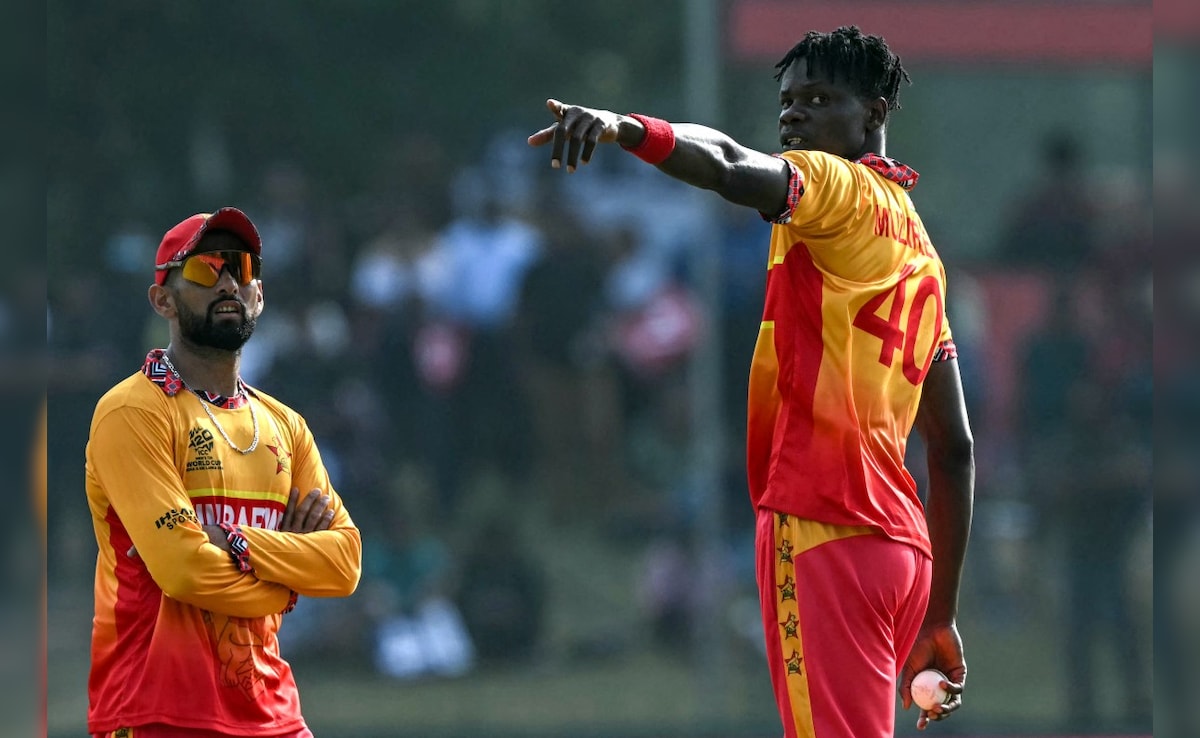
Zimbabwe’s pace duo of Blessing Muzarabani and Brad Evans delivered a masterclass in fast bowling under pressure.
Muzarabani led the charge with four crucial wickets, dismantling Australia’s top order with disciplined line and length. His ability to extract bounce and movement unsettled the batters early on. Evans complemented him perfectly, claiming three wickets and maintaining relentless pressure from the other end.
Their combined seven wickets effectively neutralized Australia’s batting depth. In T20 cricket, early breakthroughs are often decisive, and Zimbabwe capitalized fully on their advantage.
A Flicker of Hope: Maxwell and Renshaw Partnership
Despite the early collapse, Australia showed resilience through a fighting partnership between Glenn Maxwell and Matt Renshaw. The duo stitched together a 77-run stand that briefly revived hopes in the Australian camp.
Matt Renshaw played a determined knock of 65 runs, anchoring the innings and attempting to stabilize the chase. His calculated aggression kept Australia within touching distance, even as the required rate crept upward.
However, regular wickets at the other end disrupted momentum. Once Maxwell departed, the pressure intensified. Renshaw continued to battle, but without consistent support from the lower order, the equation became increasingly difficult.
Ultimately, Australia were bowled out for 146 in 19.3 overs, falling 23 runs short of the target.
Travis Head’s Honest Assessment
In the post-match presentation, Head offered a measured analysis rather than searching for excuses. He maintained that the wicket was good and that the bowling unit had done enough to keep the target chaseable.
According to Head, the match was evenly poised throughout, and there were no specific overs he would dramatically alter in hindsight. Instead, he pointed to the powerplay collapse as the defining factor.
He emphasized that in tournaments like the T20 World Cup, tight games are inevitable. The difference often lies in handling pressure during key phases. Australia, in this instance, allowed early setbacks to dictate the tempo of their chase.
Tournament Pressure and Lessons from the Past
Head also drew parallels with Australia’s previous global tournament experiences, referencing the resilience shown during the 2023 campaign in India. Several players in the dressing room have navigated high-pressure scenarios before, and Head expressed confidence that the team can recalibrate quickly.
Injury concerns and squad adjustments have added complexity to Australia’s tournament journey. However, Head insisted that maintaining belief within the dressing room is crucial as they approach their remaining group fixtures.
With two games left to secure qualification, Australia cannot afford another slip-up. The path forward demands sharper execution, especially in the powerplay overs where matches are often won or lost.
Zimbabwe’s Statement Victory
For Zimbabwe, this victory represents more than just two points—it is a statement to the cricketing world. Defeating a powerhouse like Australia in a global tournament reinforces the competitive depth of modern T20 cricket.
Their disciplined bowling attack, composed batting performance, and sharp fielding combined to produce a complete team effort. Upsets of this magnitude energize tournaments and highlight the unpredictability that makes T20 cricket so compelling.
Zimbabwe’s win also underscores the growing parity among international sides. In a format where momentum shifts rapidly, no opponent can be underestimated.
What’s Next for Australia?
Australia now prepare to face co-hosts Sri Lanka national cricket team at the Pallekele International Cricket Stadium. The fixture carries significant weight, as a victory is essential to revive their Super 8 hopes in the ICC Men’s T20 World Cup.
The upcoming match will test Australia’s mental strength as much as their tactical execution. Adjustments in batting order, powerplay approach, and shot selection may be considered to prevent another top-order collapse.
If Australia can learn from this setback and execute with greater discipline, they remain a formidable contender. However, in a tightly contested World Cup, recovery must be swift.
Zimbabwe’s 23-run triumph over Australia stands as one of the defining moments of the ICC Men’s T20 World Cup 2026 so far. While Australia entered the contest as favorites, Zimbabwe’s disciplined bowling and composure under pressure rewrote the script.
Travis Head’s honest reflection highlights a key lesson in T20 cricket: even manageable targets can become daunting when early wickets fall. For Australia, the challenge now is to regroup, refine their strategy, and restore confidence before their next crucial clash.
As the tournament unfolds, this upset serves as a reminder that in T20 cricket, reputations mean little once the first ball is bowled.