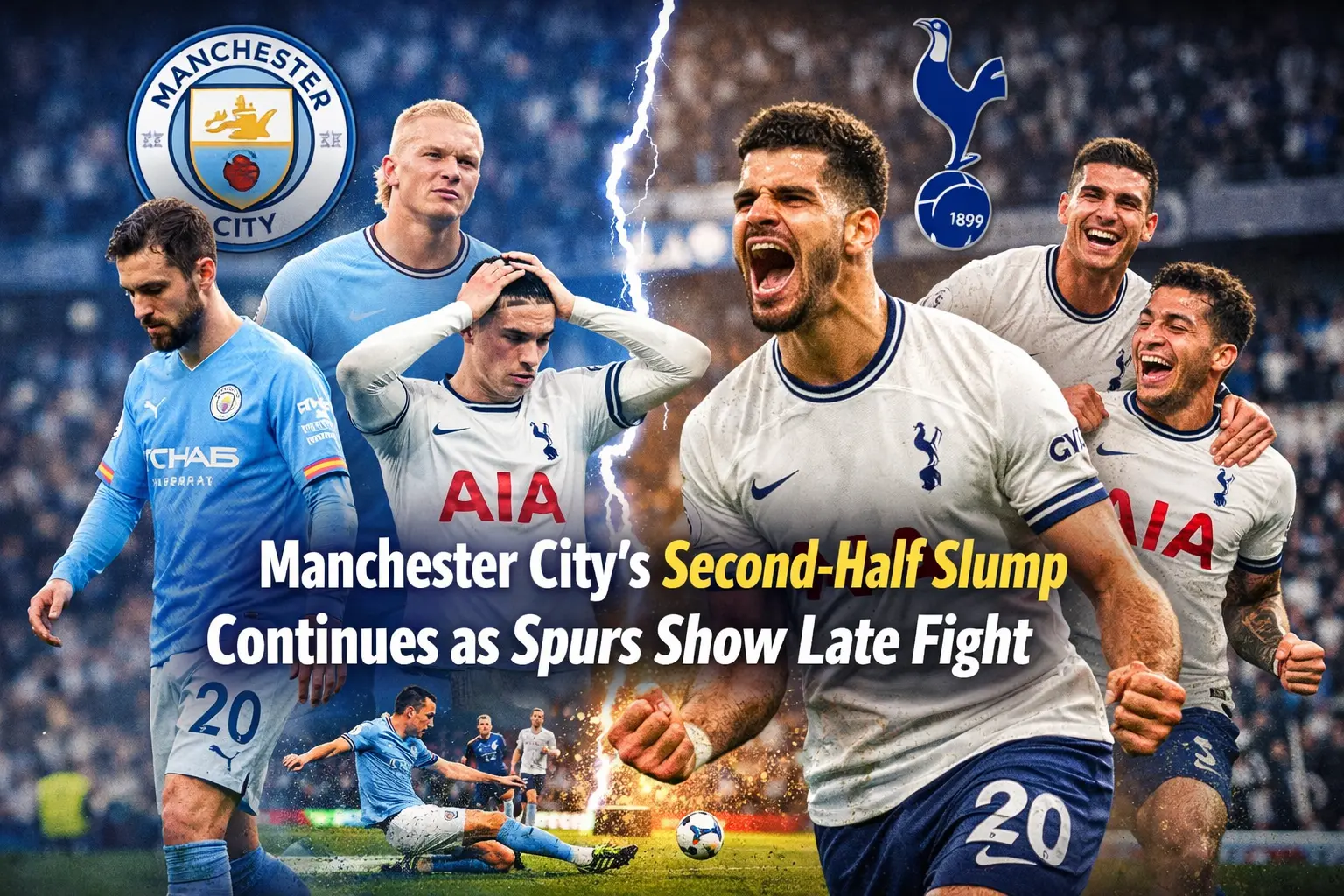
Football often thrives on contradiction, and few matches this season have illustrated that better than the dramatic draw between Tottenham Hotspur and Manchester City. What looked at half-time like a routine away victory for City turned into a familiar tale of two halves—one that exposed Manchester City’s growing vulnerability after the break and offered Tottenham a rare reminder that resilience still exists beneath their troubled season.
A predictable unpredictability
At the interval, logic appeared settled. City were two goals up, controlling possession, exploiting Tottenham’s errors, and reinforcing the belief that Pep Guardiola’s side, even when not at their best, usually know how to manage games. Spurs, meanwhile, looked disjointed, underpowered, and emotionally flat—symptoms that have defined much of their home form this campaign.
Yet football rarely respects logic for long. Tottenham have struggled badly at home, but City have developed a worrying habit of letting games drift once the second half begins. When those two opposing trends collide, the outcome feels chaotic yet strangely inevitable.
City’s recurring second-half problem
The draw did not arrive in isolation. Manchester City’s season has been punctuated by an alarming pattern: solid first halves followed by defensive lapses and loss of control after the restart. Points dropped against Brighton, Chelsea, and Manchester United all followed the same script—either a lead squandered or parity broken in the opponent’s favour.
This latest match merely reinforced the concern. City’s structure, so disciplined before the break, loosened as Tottenham raised their intensity. Pressing became half-hearted, distances between midfield and defence grew, and confidence drained away with every Spurs attack. Over the course of the season, these second-half concessions have cost City valuable points—enough to significantly alter the title race.
Tottenham’s first-half collapse
From a Tottenham perspective, the opening 45 minutes were bleak. Injuries have ravaged the squad, but the lack of organisation and urgency went beyond missing personnel. Simple mistakes proved costly, none more so than the error that allowed Bernardo Silva to dispossess Spurs in midfield and initiate the move that led to City’s opener.
The defensive shape was equally fragile. Spurs repeatedly allowed City attackers time and space on the edge of the box, a luxury rarely afforded in Premier League football. The second goal, finished clinically after a turnover deep in Tottenham territory, felt like confirmation that the contest was already over.
By half-time, the atmosphere in the stadium was subdued rather than angry—an acceptance, perhaps, from supporters who have grown accustomed to disappointment this season.
A transformation after the break
The second half, however, told a very different story. Tottenham emerged with greater intensity, sharper pressing, and renewed belief. Crucially, the return of Dominic Solanke changed the complexion of the game. His movement stretched City’s defence, his physical presence unsettled defenders, and his finishing reminded everyone what Spurs have lacked during his absence.
Beyond Solanke’s goals, there was a collective improvement. Midfield battles were contested with purpose, defensive positioning stabilised, and attacking transitions carried genuine threat. Spurs began to look like a team rather than a collection of individuals trying to survive.
City retreat, Spurs advance
As Tottenham grew in confidence, City retreated. The composure that defined their first half evaporated, replaced by hurried clearances and cautious passing. Even with superior expected-goals numbers, City found themselves defending deeper and deeper, relying on goalkeeping heroics to avoid defeat.
This psychological shift has become one of City’s most concerning traits. Once opponents sense vulnerability, belief spreads quickly—and City have struggled to reassert authority. Against elite sides, this could prove decisive as the season reaches its critical stages.
What the result means for Tottenham
For Tottenham, the draw felt like a small victory in a difficult campaign. Had results elsewhere gone against them, the club could have been dragged uncomfortably close to the relegation conversation. Instead, the comeback provided breathing space and, perhaps more importantly, belief.
The injury list remains daunting, and consistency is still elusive. But the second-half performance demonstrated fight, cohesion, and attacking intent—qualities that have been absent too often. If Spurs can replicate that intensity, survival will feel far less precarious.
What it means for Manchester City
From City’s perspective, the implications are more troubling. Title-winning sides are defined by control, especially when ahead. Repeatedly surrendering second-half leads suggests not just tactical issues but mental ones. Whether through fatigue, complacency, or structural imbalance, City are leaving themselves exposed at precisely the moments when champions usually tighten their grip.
Seven dropped points due to second-half goals may not sound catastrophic in isolation, but in a tightly contested title race, they could prove decisive.
This match was football at its most contradictory: predictable in its unpredictability, chaotic yet revealing. Tottenham showed belated resolve and rediscovered belief through Solanke’s influence. Manchester City, meanwhile, once again failed to manage a game they seemed to have won.
In the end, the draw felt fair—not because Spurs dominated throughout, but because they refused to accept the script written at half-time. For City, the warning signs continue to flash. For Tottenham, amid injuries and inconsistency, there was at least proof that the fight has not gone.