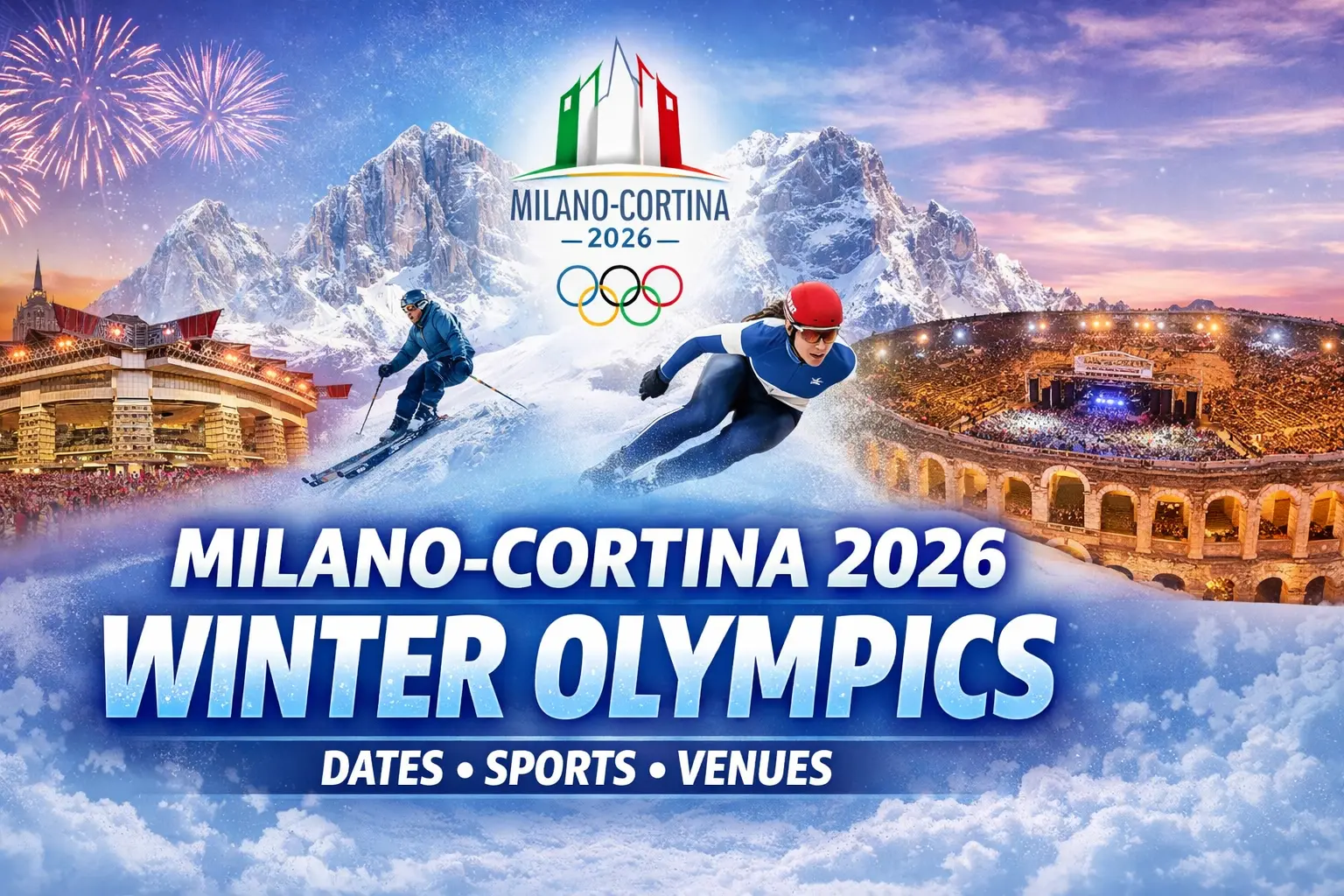
Milano-Cortina 2026 Winter Olympics: Complete Guide
The 2026 Winter Olympics, officially known as the Milano-Cortina Games 2026, mark a turning point in Olympic history. For the first time, the Winter Games will be hosted across a wide, multi-city geographic footprint, blending modern metropolitan arenas with historic alpine destinations in northern Italy. Scheduled from February 6 to February 22, 2026, with some preliminary competitions beginning earlier, these Games promise innovation, sustainability, and a uniquely Italian cultural experience.
With Milan and Cortina d’Ampezzo acting as the main hubs, Milano-Cortina 2026 will deliver world-class sport across ice rinks, snow-covered mountains, and centuries-old venues, redefining how the Winter Olympics are staged.
Dates and Key Schedule Highlights
The Opening Ceremony will take place on February 6, 2026, at the iconic San Siro Stadium in Milan. Known primarily as a football cathedral, San Siro will be transformed into a spectacular Olympic stage, setting the tone for over two weeks of elite winter sport.
Across the Games, athletes will compete in 116 medal events spanning 16 winter sports. These competitions will unfold simultaneously across multiple clusters, allowing fans to experience a dynamic, festival-like atmosphere throughout northern Italy.
The Games will conclude on February 22, 2026, with the Closing Ceremony hosted at the historic Arena di Verona. This ancient Roman amphitheatre, famed for its opera performances, will provide a dramatic and symbolic backdrop to celebrate athletic excellence and international unity.
A New Multi-City Olympic Model
Unlike past Winter Olympics that were largely centred around a single host city, Milano-Cortina 2026 will operate across more than 22,000 square kilometres. This approach reflects a deliberate move toward sustainability and infrastructure reuse, minimising new construction while maximising regional participation.
The Games will be organised into venue clusters, each tailored to specific disciplines:
- Urban ice arenas in Milan and nearby cities
- High-altitude alpine venues in the Dolomites
- Sliding and Nordic centres in established winter-sport towns
This distributed model not only reduces environmental impact but also showcases the diversity of northern Italy—from fashion-forward cities to rugged mountain landscapes.
Host Cities and Major Venues
Milan – The Ice Sports Capital



Milan, Italy’s financial and cultural powerhouse, will host the majority of ice-based sports. Events such as figure skating, ice hockey, short-track speed skating, and speed skating will take place in modern, purpose-adapted arenas.
The city’s role underscores the Olympics’ urban evolution—bringing winter sport directly into a global metropolis while relying on existing or temporary venues rather than permanent builds.
Cortina d’Ampezzo – The Alpine Heart


Nestled in the Dolomites, Cortina d’Ampezzo is one of the world’s most prestigious ski resorts and a former Olympic host (1956). In 2026, Cortina will once again take centre stage for alpine skiing, curling, and sliding sports.
The dramatic mountain scenery, combined with Cortina’s long sporting heritage, will provide a classic Winter Olympics atmosphere, contrasting beautifully with Milan’s urban setting.
Other Key Locations
Several additional towns will support the Games:
- Val di Fiemme – Nordic skiing events such as cross-country skiing and Nordic combined
- Bormio – Men’s alpine skiing competitions
- Livigno – Snowboard and freestyle skiing events
These locations already possess world-class winter-sport infrastructure, ensuring efficient operations and long-term post-Olympic use.
Sports and Events at Milano-Cortina 2026
The Games will feature 16 winter sports, combining traditional Olympic disciplines with newer, youth-oriented events. Key sports include:
- Alpine Skiing
- Biathlon
- Bobsleigh
- Cross-Country Skiing
- Curling
- Figure Skating
- Freestyle Skiing
- Ice Hockey
- Luge
- Nordic Combined
- Short-Track Speed Skating
- Skeleton
- Ski Jumping
- Snowboard
- Speed Skating
With 116 medal events, Milano-Cortina 2026 will offer one of the most comprehensive Winter Olympic programmes to date, reflecting the growing global appeal of winter sport.
Sustainability and Legacy
Sustainability is a defining principle of the Milano-Cortina Games. Instead of building large numbers of new venues, organisers are prioritising:
- Use of existing facilities
- Temporary and modular structures
- Low-emission transport between clusters
This approach aims to leave a positive legacy—boosting regional tourism, supporting local economies, and avoiding the “white elephant” stadium problem seen in past Olympics.
Cultural Experience Beyond Sport
What sets Milano-Cortina 2026 apart is its cultural depth. Spectators will be able to combine Olympic events with:
- Italian cuisine and wine
- Historic architecture and UNESCO-listed landscapes
- Fashion, music, and art scenes in Milan
- Traditional alpine culture in mountain towns
The Games are designed not just as a sporting event, but as a nationwide celebration of Italy’s heritage and modern identity.
Why Milano-Cortina 2026 Matters
The 2026 Winter Olympics represent a new vision for the Games—spread out, sustainable, and culturally immersive. By uniting a global city like Milan with legendary alpine resorts such as Cortina d’Ampezzo, the Olympics will reach wider audiences while respecting environmental and economic realities.
As the world turns its attention to northern Italy in February 2026, Milano-Cortina promises not only thrilling competition but also a blueprint for the future of the Olympic Movement.