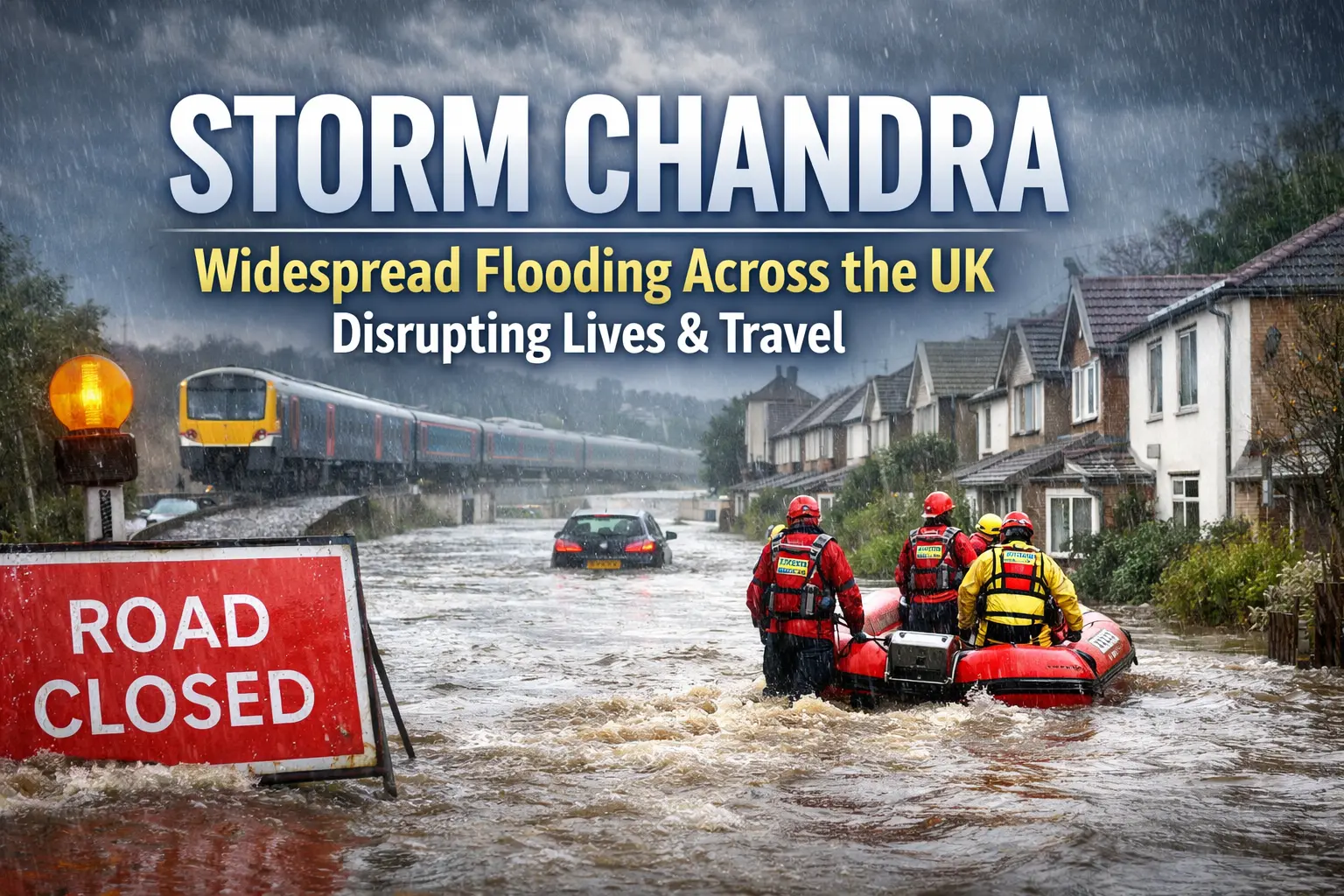
The United Kingdom continues to grapple with severe weather as the impact of Storm Chandra unfolds across large parts of the country. Days after intense wind and torrential rain battered towns and cities, hundreds of flood warnings and alerts remain active, highlighting the scale of disruption and the risks still facing communities. The storm, which struck on Tuesday, has compounded the effects of earlier weather systems, arriving when the ground was already saturated and river levels were high.
A Nation on Flood Alert
As of Wednesday afternoon, authorities confirmed that dozens of flood warnings—where flooding is expected—and more than 200 flood alerts, indicating possible flooding, were in place across England. Wales and Scotland were also affected, with several warnings and alerts issued as rivers struggled to cope with the volume of water. The situation has left emergency services stretched and local authorities urging residents in vulnerable areas to remain vigilant.
In Dorset, the situation became particularly serious along the Lower River Stour near Bournemouth. A rare “danger to life” warning was issued, prompting the evacuation of residents from a riverside residential park. People living in the affected area were advised to leave immediately, taking only essential belongings and medications, and to prepare for the possibility of being away from their homes overnight. Power supplies were also scheduled to be switched off as a precaution ahead of further flooding.
Tragedy Amid the Chaos
The human cost of Storm Chandra became starkly clear when police confirmed the death of a lorry driver in Hampshire. The driver’s vehicle was swept into a river in an area severely impacted by flooding. The incident underscored the dangers posed by floodwaters, even to experienced motorists, and reinforced repeated warnings from authorities not to drive through flooded roads.
Somerset Declares Major Incident
In Somerset, local officials declared a major incident after floodwaters inundated around 50 properties. While Wednesday brought some respite with drier conditions, council leaders warned that the threat was far from over. Rivers remained swollen, and additional rainfall forecast later in the week could push them back over their banks.
Flooding forced the closure of eight schools in the county, along with several local roads, disrupting daily life for families and businesses. Emergency crews worked through the night to assist residents, deploy sandbags, and monitor vulnerable locations.
Repeated Flooding Takes Its Toll
For some communities, Storm Chandra was not a one-off disaster but part of a troubling pattern. Residents living near the River Stour in Dorset reported that their homes had already flooded earlier in the year and again in late 2024. For many, this latest evacuation marked the third time in a decade they had been forced to leave because of rising waters.
Local residents’ association leaders described the emotional strain of repeated flooding, with families facing ongoing uncertainty, property damage, and rising insurance concerns. The recurrence has reignited debates about long-term flood defences and climate resilience in vulnerable areas.
Transport and Power Disruptions
Travel across the UK has also been heavily affected. National Rail warned passengers that poor weather conditions could continue to disrupt train services across England, Scotland, and Wales until at least Friday. Flooded tracks, fallen trees, and damaged infrastructure led to delays and cancellations, complicating journeys for commuters and long-distance travellers alike.
In Northern Ireland, the storm caused widespread power outages, with more than 10,000 properties left without electricity at the peak of the disruption. Over 300 schools were closed as a precaution, and strong winds—reaching gusts of up to 80mph in some coastal areas—forced the cancellation of domestic flights and ferry services. Similar issues were reported in parts of the Republic of Ireland, where tens of thousands of homes and businesses lost power temporarily.
Rivers at Record Levels
The intense rainfall brought by Storm Chandra set new January daily rainfall records in several locations, including parts of Dorset, Plymouth, and Northern Ireland. In Devon, the River Otter reached its highest recorded level, prompting severe flood warnings earlier in the week. Although those extreme warnings have since been lifted, the damage left behind has been significant.
Officials from the Environment Agency described rivers in affected areas as fast-flowing and unpredictable, urging people to stay away from swollen waterways. Residents living near riverbanks reported seeing water levels rise at an alarming speed, transforming normally calm rivers into torrents within hours.
Weather Outlook: More Challenges Ahead
While Wednesday offered a brief break with some sunshine and largely dry conditions for many regions, meteorologists cautioned that the relief would be short-lived. A yellow rain warning remains in place for south-west England through Thursday and into the early hours of Friday, with forecasts suggesting an additional 10–20mm of rainfall. Northern Ireland is also under a fresh rain warning for Friday.
The Met Office has warned that further rainfall could exacerbate existing flooding problems, particularly in areas where rivers are already under stress. In addition to rain, colder air moving in later in the week could bring snow to higher ground. Parts of the Pennines and Southern Uplands may see 2–7cm of snowfall above 200 metres, raising the risk of hazardous travel conditions.
Storm Season Intensifies
Storm Chandra is the third named storm to hit the UK this year, arriving shortly after Storm Ingrid and Storm Goretti. The rapid succession of storms has left little time for rivers to recover or for communities to repair damage, amplifying the overall impact. Meteorologists have described the recent sequence as one of the most disruptive starts to a year in decades for some regions, particularly in the south-west.
As communities begin the slow process of recovery, questions are being raised about preparedness and resilience in the face of increasingly frequent extreme weather events. For now, authorities continue to urge caution: avoid unnecessary travel, heed evacuation advice, and stay informed through official updates.
Storm Chandra may soon move on, but its effects—damaged homes, disrupted transport, and shaken communities—will be felt long after the rain clouds clear.