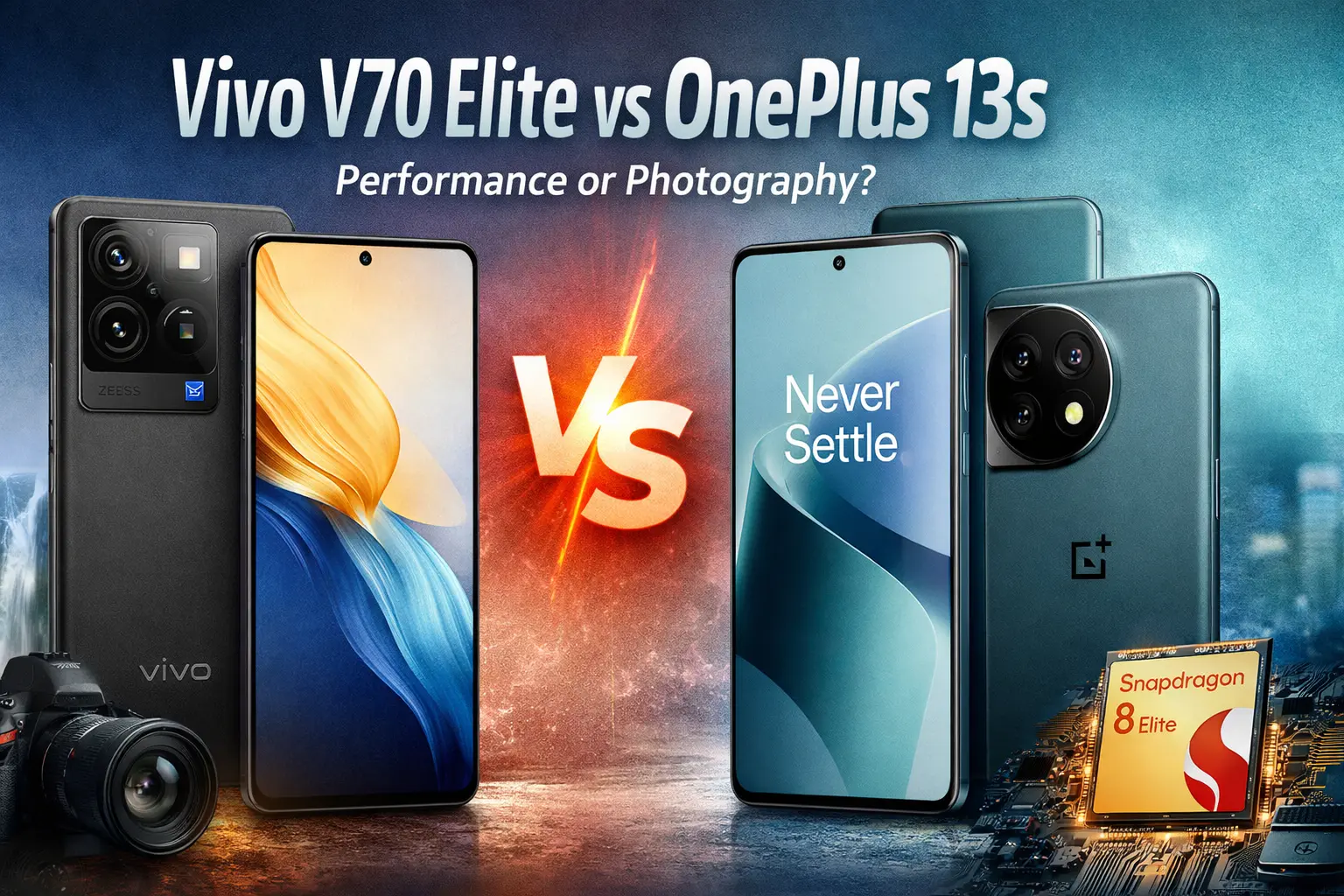
Vivo V70 Elite vs OnePlus 13s: Similar Looks, Completely Different Experience
The sub-₹55,000 smartphone segment has become fiercely competitive, and two standout contenders are the Vivo V70 Elite and the OnePlus 13s. At first glance, these devices appear strikingly similar. They share premium materials, Snapdragon 8-series chipsets, telephoto cameras, and fast LPDDR5X RAM. However, beyond the surface, these smartphones target entirely different types of users.
If you’re deciding between them, this in-depth comparison will help you understand where they overlap—and where they differ significantly.
Design & Build: Premium Feel With a Durability Twist
Both phones follow a modern design language with flat edges, rounded corners, and a square-shaped camera module. Aluminum frames enhance durability and in-hand feel, while matte-finished backs help resist fingerprints and smudges.
However, there’s a clear difference in protection levels:
- Vivo V70 Elite: IP68/IP69 rating (high resistance to water and dust)
- OnePlus 13s: IP65 rating (protection against minor splashes)
For outdoor enthusiasts or those seeking extra durability, the Vivo device clearly holds the edge.
When it comes to ergonomics, the OnePlus 13s is easier to handle. It features a compact 6.32-inch display and weighs 185 grams. The Vivo V70 Elite, with its 6.59-inch display and 194-gram weight, feels slightly larger, though it is slimmer at 7.59mm compared to 8.2mm on the OnePlus.
Both brands include protective cases in the box. OnePlus provides a color-matched case, while Vivo includes a transparent one.
Display: Brightness vs Efficiency

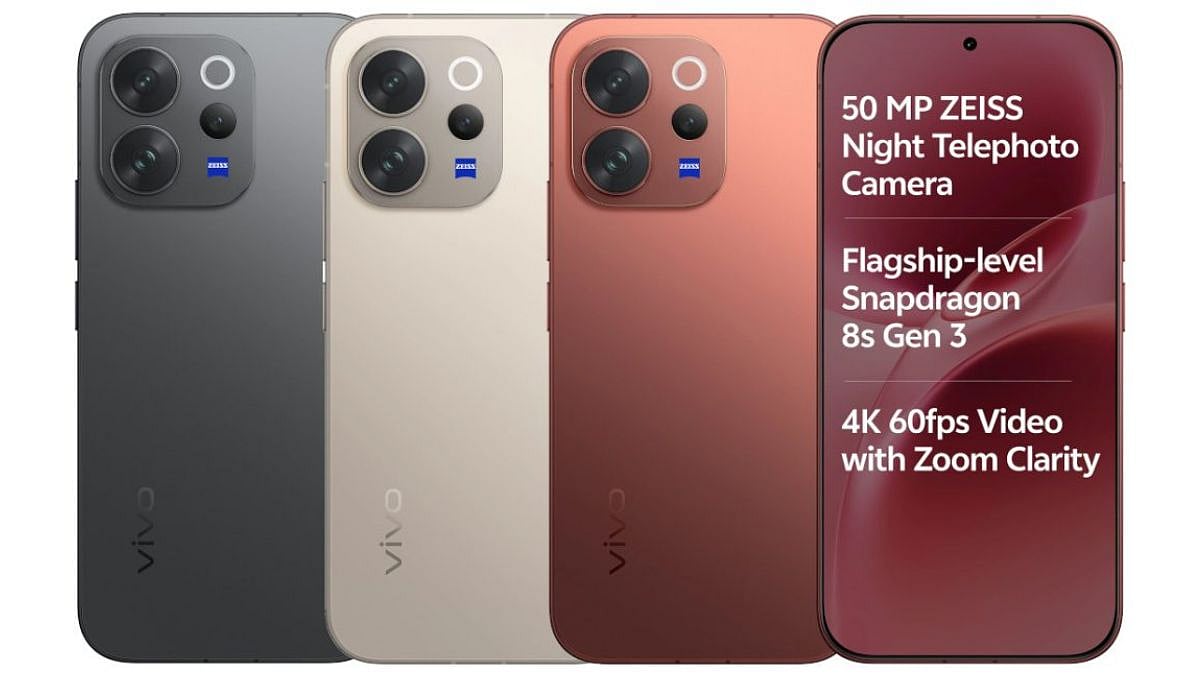
On paper, the displays are nearly identical:
- AMOLED panels
- 1.5K resolution
- 10-bit color depth
- 460 ppi
- Up to 120Hz refresh rate
- Center punch-hole design
Color reproduction is vivid and punchy on both devices, with deep blacks and customizable profiles.
The difference lies in brightness and refresh rate control:
- Vivo V70 Elite: 1,800 nits peak brightness
- OnePlus 13s: 1,600 nits peak brightness
Outdoors, the Vivo panel appears slightly more legible.
However, the OnePlus 13s features LTPO technology, allowing the refresh rate to drop to 1Hz when idle for improved power efficiency. The Vivo panel drops only to 60Hz. In daily usage, both feel equally smooth, but OnePlus gains an advantage in dynamic power optimization.
Camera: Versatility vs Simplicity
Photography is where the two phones take distinctly different paths.
Vivo V70 Elite Camera Setup:
- 50MP ZEISS OIS primary (Sony sensor)
- 50MP 3x telephoto with OIS
- 8MP ultrawide
- 50MP front camera
Vivo adds creative enhancements such as AI Visual modes, seasonal background changes, and festival filters like AI Floral and AI Holi. The results are vibrant and detailed, with good highlight and shadow control. Low-light performance is commendable.
Portraits offer multiple focal options, though edge detection occasionally needs refinement. The 8MP ultrawide lens is the weakest link, delivering lower detail and modest dynamic range.
OnePlus 13s Camera Setup:
- 50MP OIS primary
- 50MP 2x telephoto (no OIS)
- 32MP front camera
The OnePlus camera system is more straightforward. It lacks ultrawide capabilities and the creative modes found in Vivo’s offering. However, it produces warmer tones and often achieves superior dynamic range in certain conditions.
Portrait bokeh can look slightly artificial, and selfies sometimes appear overprocessed. Casual photographers may appreciate its simplicity, but photography enthusiasts may prefer Vivo’s versatility.
Performance: Sub-Flagship vs True Flagship
The biggest separation lies under the hood.
The Vivo V70 Elite runs on the Snapdragon 8s Gen 3 chipset with up to 12GB LPDDR5X RAM and 256GB UFS 4.1 storage.
The OnePlus 13s is powered by the more advanced Snapdragon 8 Elite processor, paired with up to 12GB LPDDR5X RAM and 512GB UFS 4.0 storage.
In real-world usage:
- The OnePlus 13s launches apps faster.
- Video rendering in 4K is quicker.
- Consecutive photo capture feels smoother.
- Multitasking is more fluid under heavy load.
Benchmark scores strongly favor the OnePlus device. That said, the Vivo V70 Elite is well-optimized for everyday tasks and casual gaming. Titles like BGMI and Call of Duty: Mobile run smoothly on both devices, though neither is designed specifically as a gaming powerhouse.
If you prioritize high performance and demanding workloads, OnePlus is the better pick.
Software Experience: Nearly Identical Longevity
The Vivo V70 Elite runs Android 16-based OriginOS 6 out of the box, while the OnePlus 13s ships with OxygenOS 15 (Android 15), upgradeable to Android 16.
Both brands promise:
- 4 major Android updates
- 6 years of security patches
OxygenOS feels cleaner with fewer pre-installed apps. OriginOS offers extra customization features, such as quick charging mode selection directly from the lock screen.
Since Vivo launches with the latest Android version pre-installed, it may remain updated slightly longer in the long term.
Battery & Charging: Bigger Cell vs Smarter Optimization
Battery capacity is another key difference:
- Vivo V70 Elite: 6,500mAh silicon-carbon battery
- OnePlus 13s: 5,850mAh lithium-ion battery
In battery benchmark testing, Vivo performs slightly better, lasting over 18 hours compared to approximately 16.5 hours on OnePlus. During gaming and streaming tests, Vivo consumed less battery.
However, in real-world usage, the difference feels marginal. The OnePlus 13s benefits from its smaller display and LTPO efficiency.
Charging speeds are similar:
- Vivo: 90W fast charging
- OnePlus: 80W fast charging
Both reach near full charge in about 40 minutes, and chargers are included in the box.
Final Verdict: Which One Should You Choose?
The Vivo V70 Elite is a well-rounded smartphone focusing on battery life, brighter display performance, camera versatility, and stronger ingress protection. It is ideal for users who prioritize photography and long-lasting endurance.
The OnePlus 13s, on the other hand, is built for users who demand performance, compact handling, and smoother heavy-task execution. Its flagship-grade processor and LTPO display make it better suited for power users.
Choose Vivo V70 Elite if you want:
- Superior battery life
- Brighter display outdoors
- More camera features
- Stronger water and dust protection
Choose OnePlus 13s if you want:
- Flagship-level performance
- Compact form factor
- Better power efficiency
- Faster workload execution
Ultimately, while these phones may look similar, they deliver two very different user experiences. Your choice should depend entirely on whether you value photography and endurance—or raw performance and compact comfort.